Introduction
Antique chess sets captivate collectors and enthusiasts alike, serving as more than mere playing instruments. Each set tells a story about the era in which it was created, particularly through the choice and treatment of materials. From lavish woods to elegant metals, the substance of a chess set shapes its aesthetic presence, structural longevity, and historical value. For those keen to explore fine examples of craftsmanship, Jaques Chess Sets offers a selection of Jaques chess sets, representing some of the pinnacle achievements in chess set design and material selection. Appreciating these sets requires understanding the nuanced traits that each material brings to the chessboard, as well as their implications for collectors and historians.
The significance of materials goes beyond mere appearance. Over centuries, the materials selected for chess pieces and boards have mirrored technological advances, artistic trends, and even societal values. Choices made by artisans balance premium aesthetics with practical concerns, such as wear resistance and repairability.
Today, antique chess sets constructed from wood, ivory, metal, and rarer substances offer a tangible link to the past. Collectors face the challenge of distinguishing authentic, well-preserved sets from modern reproductions and understanding the important role of regulation and ethics regarding materials once prized but now protected. Thus, the journey into the realm of material diversity not only enriches a collector’s appreciation but also broadens understanding of the ways craft, luxury, and history intertwine in the chess world.
Wood: The Traditional Choice
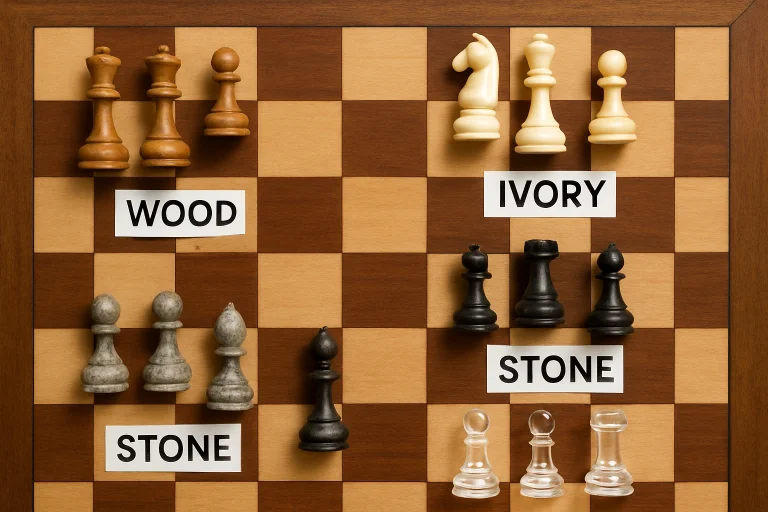
Wood has long been the favored medium for crafting chess sets, prized for its organic beauty and tactile warmth. Among antiques, hardwoods are most esteemed. Ebony and rosewood introduce deep, lustrous tones, while softer hues are found in walnut, mahogany, maple, and boxwood. Collectors prefer sets that feature tight grain, fine finishing, and hand-cut squares. The presence of inlays, where dark and light woods are fitted together with precision, is a hallmark of quality. Stained woods are viewed as less desirable because they lack the depth and authenticity of naturally colored species.
Chessboards become even more alluring when composed of contrasting hardwoods rather than surface stain or painted patterns. Over time, well-crafted wood retains durability while developing a rich patina that enhances its appeal. The tactile experience of playing on a wooden set, combined with the artistry visible in carving and finish, underscores why wood remains the most enduring choice for traditional chess sets.
Ivory: A Historical Perspective
Ivory chess sets are synonymous with luxury and intricacy. Historically sourced from elephant tusks, ivory pieces are revered for their finely grained surface, which skilled artisans could carve into elaborate motifs and lifelike forms. This prestige material was once reserved for royalty and the elite, representing both status and refined taste. The natural glow and unexpected heft of ivory add to the allure for collectors.
It is important to note, however, that the trade and sale of ivory are now heavily restricted due to conservation concerns and legal protections under international agreements. Modern appreciation of ivory antique chess sets is inextricably linked to ethical obligations, requiring purchasers to carefully document the origin, age, and legality of any ivory pieces they acquire. The future of ivory in chess set collecting lies in responsible stewardship and adoption of alternatives that replicate the look and feel without endangering wildlife populations.
Metal: Durability and Elegance
Metals introduce an entirely different aesthetic and tactile profile to chess sets. Brass, zinc, pewter, and silver have all featured in historic and decorative sets. Metal sets provide durability, resistance to environmental damage, and a satisfying weight that changes the feel of gameplay. Many were designed during the late 19th and early 20th centuries with themed styles such as medieval or Art Deco, serving as both functional objects and decorative art.
The reflective surface and cool touch of metal chess pieces offer a singular charm, while the increased mass discourages accidental tipping. Collectors should inspect metal sets for signs of corrosion or poorly repaired joints, as the integrity of the joints is crucial for long-term value. Metal chess sets often straddle the line between game and sculpture, turning chess into an artful display of form and material.
Bone and Other Natural Materials
Before modern regulations, bone, horn, and other animal byproducts were common in the crafting of chess pieces. Bone pieces, often mistaken for ivory, can be differentiated by their visible pores and slightly rougher feel. These materials were more accessible than ivory and offered a reasonable alternative for finely carved sets. Horn pieces, generally seen less frequently, are recognized by their curved shapes and often translucent qualities.
Today, environmental and ethical considerations restrict the harvesting of such materials. Many current reproductions use faux ivory or reconstituted bone to safely evoke the look of historic pieces. Genuine bone and horn sets are appreciated for what they reveal about the resourcefulness and artistry of their makers in bygone eras.
Stone and Marble: Aesthetic Appeal
Stone-based chess sets, especially those made from marble, onyx, or alabaster, offer a natural elegance and remarkable durability. Italian, Indian, and Middle Eastern stone chessboards are highly prized for their craftsmanship and design. Each piece and square is carved and polished by hand, with unique colorations and patterns emerging from the mineral deposits within the stone.
While marble sets are less suited to tournament play, they serve as visually stunning centerpieces and often command higher prices due to the labor-intensive production process. Collectors should be vigilant for chips, cracks, and disguised repairs that can diminish both playability and value. Stone chess sets appeal particularly to those who value decorative function alongside playability.
Glass and Crystal: Fragile Beauty
Glass and crystal chess sets showcase the game’s beauty in its most ethereal form. Whether created with frosted, etched, or colored glass, these sets are typically designed with display in mind rather than daily play. The transparency or translucence of glass imparts an airy, contemporary feel, while the added brilliance of crystal raises the stakes for sophistication and fragility.
These materials are inherently delicate, making them cherished more for their visual appeal and artistic craftsmanship than their practical function. When displayed in the right setting, glass and crystal chess sets can capture light and attention, elevating chess from a cerebral challenge to a work of art.
Final Thoughts
The study of materials in antique chess sets unveils not only the evolution of chess as a pastime but also the interplay between art, culture, and conservation ethics. From the robust tradition of woods to the refined prestige of ivory, the enduring practicality of metals, and the unique beauty of marble or glass, each material tells its own story. Enthusiasts and collectors enrich their understanding by recognizing these stories and ensuring the preservation and ethical stewardship of cherished chess artifacts for future generations.