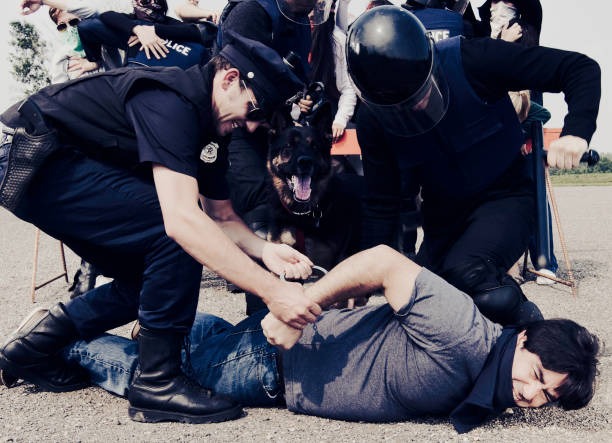
Interacting with police can be stressful, especially during an arrest. It’s important to understand your legal obligations and boundaries in such situations. In California, Resisting Arrest (Penal Code § 148(a)(1)) refers to more than just physically fighting an officer. Even small acts of interference or refusal to cooperate can lead to criminal charges. This blog explains what this law means, what actions may violate it, and the possible consequences of being charged under it.
What Does Penal Code § 148(a)(1) Say?
California Penal Code § 148(a)(1) makes it a crime to willfully resist, delay, or obstruct a public officer, peace officer, or emergency medical technician (EMT) while they are performing their official duties. The law is written broadly to cover many types of behavior, not just physical struggles.
A charge of Resisting Arrest does not require the use of force or violence. Simply delaying or interfering with an officer’s job in a meaningful way can be enough to trigger a charge.
Key Elements of the Offense
To be convicted under Penal Code § 148(a)(1), prosecutors must prove several key facts:
- The person intentionally acted to resist, delay, or obstruct.
- The victim was a public officer, such as a police officer, deputy sheriff, or EMT.
- The officer was lawfully performing official duties at the time of the incident.
- The accused knew or should have known that the person was an officer performing lawful duties.
This means accidental interference or confusion about the officer’s role might not meet the legal standard.
Examples of Resisting Arrest
Here are some common situations where someone might face charges under Resisting Arrest (Penal Code § 148(a)(1)):
- Pulling your arm away when an officer tries to handcuff you
- Running from an officer after being told to stop
- Refusing to sit down or follow basic commands during a lawful detention
- Verbally distracting or interfering with an officer questioning someone else
- Attempting to block an EMT from helping a victim
Even passive resistance like tensing your body or refusing to walk can sometimes be used as evidence under this law.
Actions That May Not Count as Resistance
Not every interaction that upsets an officer qualifies as resisting arrest. Courts have made clear that certain behaviors, even if frustrating, are protected:
- Verbal criticism alone: Arguing or expressing frustration, without interference, is usually not enough.
- Silence or refusal to answer questions: This is a constitutional right and does not count as resistance.
- Lawful protest: Peaceful protest or demonstration that doesn’t obstruct official duties is generally not covered.
That said, behavior that starts as protected speech can turn into resistance if it escalates into physical interference or delay.
Legal Consequences and Penalties
Resisting Arrest (Penal Code § 148(a)(1)) is typically charged as a misdemeanor. If convicted, a person may face:
- Up to one year in county jail
- Fines up to $1,000
- Probation
- A permanent criminal record
In some cases, a judge may allow diversion programs, especially for first-time offenders. However, this depends on the facts of the case and the court’s discretion.
If the resistance involves violence, weapons, or results in injury, prosecutors may file additional charges such as battery on a peace officer or escalate the case to a felony.
Common Defenses to the Charge
Several defenses can be used against a charge under Penal Code § 148(a)(1), depending on the circumstances:
- Unlawful arrest: If the officer wasn’t acting lawfully, resistance may be legally justified.
- Lack of intent: If the person did not willfully resist or obstruct, the law may not apply.
- Mistaken identity: If the accused didn’t realize the person was an officer or didn’t interfere directly.
- False accusation: Sometimes charges are filed when someone is simply present or vocal but not interfering.
Each case is different, and the success of a defense depends on the specific facts and available evidence.
Why This Charge Matters in Broader Legal Cases
A charge of Resisting Arrest (Penal Code § 148(a)(1)) may seem minor, but it can have lasting effects. It may influence the outcome of related cases, including:
- Probation or parole violations
- Immigration status for non-citizens
- Family court or child custody disputes
- Job background checks
It can also be used to justify use of force by law enforcement, which might affect investigations into police conduct.
Final Thoughts
Understanding what counts as Resisting Arrest (Penal Code § 148(a)(1)) is important for anyone living in or visiting California. The law covers more than just fighting with officers – it includes any intentional act that delays or obstructs official duties. Knowing your rights, and how your actions might be interpreted, can help prevent unnecessary trouble.
If you’re ever unsure about how to respond during an encounter with law enforcement, staying calm and avoiding interference is often the safest choice. Even small actions can have legal consequences, especially under a law as broad as this one. Reach out to the David P. Shapiro Criminal Defense Attorneys to learn more!