Introduction
Bollards serve as protective barriers, separating pedestrian spaces from vehicular zones and enhancing urban safety. Over time, however, the need arises to temporarily or permanently remove them, whether for repairs, upgrades, or the reconfiguration of public areas. The process of bollard removal requires a thoughtful approach to maintain safety standards and prevent unnecessary disruption.
A comprehensive understanding of removal best practices is essential to avoid compromising the functionality of the surrounding infrastructure. Effective planning ensures that all stakeholders, from local authorities to construction teams, are aligned on safety and operational objectives throughout the process.
Situations such as seasonal demands—where snowplows require unobstructed access—or large-scale maintenance can make bollard removal a routine necessity. Additionally, the rise in urban development projects has heightened awareness of the importance of safe and efficient removal procedures.
These instances highlight the growing relevance of proactive bollard management for city planners and facility managers. Failure to plan adequately may lead to service disruptions or, more seriously, to risks for pedestrians and motorists alike.
Reasons for Bollard Removal
There are various scenarios in which bollard removal becomes necessary:
- Maintenance and Repairs: Exposure to weather and collisions can deteriorate bollards, necessitating removal for repair or replacement. For example, in New Orleans, malfunctioning security bollards on Bourbon Street were recently removed after repeated issues, highlighting the importance of regular inspections and maintenance, NBC News. Routine checks ensure that these safety installations continue to function effectively and protect pedestrians and property.
- Seasonal Adjustments: In winter climates, removable or retractable bollards help avoid damage from snow-clearing operations, provided the process is managed with winterization best practices.
- Infrastructure and Urban Development: Roadway redesigns, utility upgrades, expansions of pedestrian areas, and new construction frequently demand temporary or permanent bollard removal to facilitate work and maintain accessibility.
Bollard management extends beyond roads; transit hubs, parks, venues, and ports are increasingly integrating bollard solutions to handle evolving urban challenges.
Pre-Removal Considerations
Successful bollard removal begins with a thorough assessment and planning stage. Before initiating any work, conduct a detailed site evaluation to identify potential obstacles, assess ground stability, and understand access constraints. This includes a careful check for underground utilities—fiber optic cables, water or gas lines, and electrical conduits—to prevent costly and hazardous incidents.
Identify the materials used in the bollard’s structure and its foundation. Some bollards are surface-mounted while others are deeply embedded in reinforced concrete, requiring different removal approaches. Determine whether specialty tools or additional labor will be necessary for safe extraction.
Prioritize safety by obtaining the necessary permits and notifying nearby businesses and residents about anticipated disruptions. For more guidance on utility checks and urban excavation, the U.S. Department of Transportation offers a comprehensive resource.
Step-by-Step Bollard Removal Process
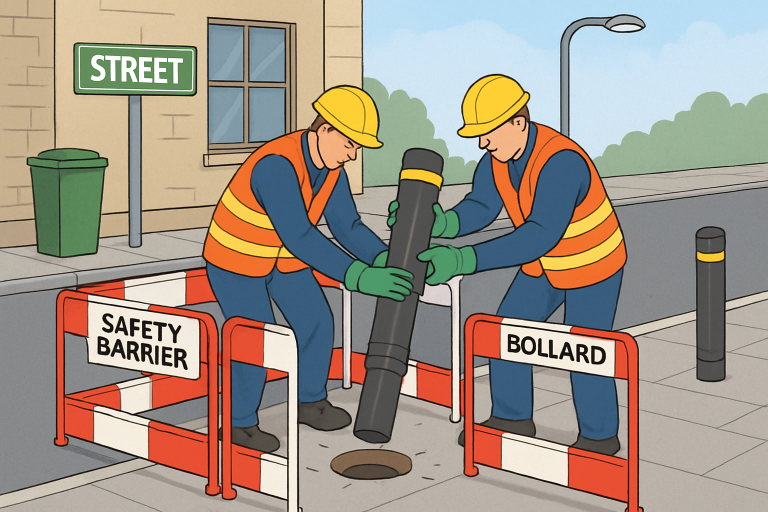
- Gather Required Tools and Equipment: Assemble all necessary equipment, including cutting tools, jackhammers, safety barriers, warning signage, and personal protective gear.
- Secure the Area: Clearly mark and cordon off the working zone to protect the public and project crew.
- Loosen the Bollard: For bolt-down installations, unscrew and remove fixings. For embedded types, break the surrounding concrete using specialized tools until the foundation is sufficiently exposed.
- Extract the Bollard: Carefully lift the bollard from its setting. Employ lifting equipment for heavy or deeply set installations to prevent injury and surface damage.
- Fill and Restore the Site: Fill in holes with appropriate material, compact, and resurface as required to match adjacent pavement. Remove debris and inspect for hazards, such as protruding bolts or uneven surfaces.
Following these steps minimizes the risk of injury, property damage, or liability issues during and after removal.
Common Challenges and Solutions
- Stubborn or Deep Foundations: Reinforced concrete or intense settings can make extraction challenging. Hydraulic breakers and saws may be required for removal without damaging adjacent structures.
- Adverse Weather: Rain, snow, and freezing temperatures complicate both safety and machinery operation. Plan removals during optimal weather conditions and prepare for unexpected delays.
- Structural Impact on Surroundings: Removal can sometimes affect nearby paving, curbs, or utilities. Ensure constant monitoring and, when needed, consult structural experts during difficult removals. The American Society of Civil Engineers has more information on urban infrastructure best practices.
Post-Removal Maintenance
After bollards are removed, meticulous restoration ensures safety, aesthetics, and compliance with local codes. Repair and resurface all affected pavement, check for hidden hazards, and signal areas where new installations may be planned.
Perform a thorough inspection of the completed site for loose materials, uneven surfaces, and other trip hazards. Ongoing documentation, including photos and notes on the removal process, supports compliance for future projects and municipal requirements.
Conclusion
Bollard removal, while often routine, demands a careful balance between infrastructure needs, public safety, and regulatory compliance. By following best practices—ranging from in-depth site assessment and utility checks through cautious removal and thorough surface restoration—communities can uphold urban safety for all. For further expert guidance on bollard maintenance and removal.