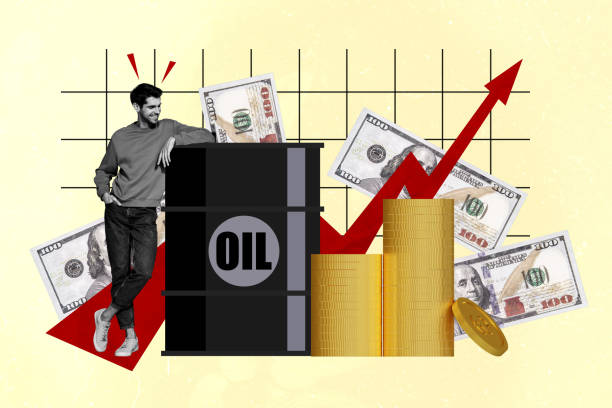
From the gasoline we put in our automobiles to the goods we purchase at the grocery store, oil costs are a significant economic factor affecting all our lives. Changes in the price of crude oil have a cascading effect on whole economies, impacting everything from family budgets to governmental policy. Anyone attempting to negotiate today’s complicated economic environment must comprehend this relationship. One of our day’s most important economic links is that between oil prices and inflation, which impacts millions of people globally through various routes frequently hidden from the typical consumer.
The Direct Link Between Oil and Inflation Rates
Since petroleum products are necessary for almost every aspect of the economy, oil costs are the leading cause of inflation. Oil prices would make businesses spend more on production, transport and energy consumption. One of the outcomes of these additional costs will be higher prices of products and services. Central banks closely monitor fluctuations in oil prices when considering the possibility of monetary policy decisions because a sustained increase in oil prices may create inflationary forces that require intervention. Because of the link’s strength, economists frequently use oil price estimates as significant indicators for projecting future patterns in inflation in various locations.
Transportation Costs Feel the Immediate Impact
Since fuel accounts for a sizable amount of operating costs for aeroplanes, shipping businesses, and logistics organizations, the transportation industry is most immediately and visibly impacted by fluctuations in oil prices. These businesses are forced to either absorb the extra expenses or pass them on to customers through increased ticket and shipping prices when oil prices rise. This leads to increased transport costs of people and things in every sector of the economy. Personal transportation also becomes expensive, and people spend their earnings on travelling and commuting, leading to their reduced buying power elsewhere in the economy.
Manufacturing and Production Expenses Escalate
Manufacturing businesses heavily rely on oil-based goods since they provide their companies with energy that can be used to create synthetic materials, chemicals, and polymers. With the increase in oil prices, production expenses essentially increase; thus, a producer has to make painful decisions on pricing and profit margin. Consequently, most companies reduce costs, affecting job creation and salaries. The industrial sector is very susceptible to any fluctuation in the oil prices; hence, entire supply chains can be disrupted, thus triggering shortages, delays, and, finally, high prices of final goods that ultimately arrive at the customer on those retail market platforms.
Food Prices Rise Through Multiple Channels
Most farmers have to spend a lot on gasoline to power their machinery, fertilizers and insecticides, which are composed of crude oil, which burdens the agricultural sector. Transportation of foodstuffs to manufacturing industries and finally retail outlets also becomes extremely expensive. These rising expenses along the food chain eventually cause consumers to pay more to buy groceries. Moreover, the more the substitution of crops is utilized as a biofuel source, the more there would be rivalry between the food and fuel markets, and the stronger the connection between the oil price and food price during volatile energy price cycles.
Housing and Utility Bills Experience Upward Pressure
An increase in oil prices automatically brings about a drastic rise in the cost of residential energy consumption, particularly in regions where home heating is still dominated by heating oil. Since there are complex connections between energy sources, a burning oil market often causes a rise in the utility charges, even in areas where natural gas or electricity is more common. Rising prices of petroleum-based materials and transport costs of building supplies are other factors that increase construction costs. These cause the cost of housing in the new construction and existing properties to grow because of high maintenance and operating costs of both house owners and landlords, which is reflected in the rental rates and the values of the properties.
Consumer Spending Patterns Shift Dramatically
With an increase in the price of oil, consumers have to readjust their spending levels, giving up optional spending to pay higher energy and transportation costs. As greater percentages of families’ income go to fuel, people will spend less time on entertainment, eating outside, and shopping for non-necessities. This shift in customer behavior affects the entire retail sector when the companies in the entertainment, hotel, and luxury goods industries start experiencing a drop in demand. The effects of increased petrol costs are also psychological, as they make shoppers even more conservative in their spending patterns. Most products’ oil price increases cannot be seen directly.
Economic Growth Faces Headwinds from Energy Costs
Prolonged security in high oil prices can substantially stagnate an economy’s development, as citizens and businesses adjust to a more economically viable consumption history. Placed under pressure of rising operating costs, companies can delay capital outlays, limit hiring, or delay development plans. Consumer spending contributes to a large part of economic activities, which decreases when consumers have increased energy and transport expenses. The reduced economic exercise may lead to slower job creation, slower profit tempos, and minimal firm earnings, thus pushing the economy not to prosper and grow.
Global Markets and Currency Values Fluctuate
Oil prices can significantly affect the balance of international trade and the currency value because the oil-importing countries need a greater share of their foreign exchange reserves to purchase energy sources. In a high oil price environment, the currencies of oil-exporting nations are likely to become stronger, but those of the oil-importing nations may deteriorate. These exchange rate fluctuations affect the price of commodities imported, and this adds a greater burden to the inflation in countries that are importers of oil. The stock markets are also prone to the price fluctuation of oil; the businesses involved with the energy industry tend to benefit when the oil becomes expensive, and the industrial and transportation stock markets are likely to decrease.
Conclusion
The relationship between the price of oil and economic conditions shows just how complex our modern economies are and how changes in one sector tremendously affect a wide range of other businesses and aspects of our daily lives. Understanding these relationships helps individuals and organizations make superior long-range planning, investment, and budget decisions.