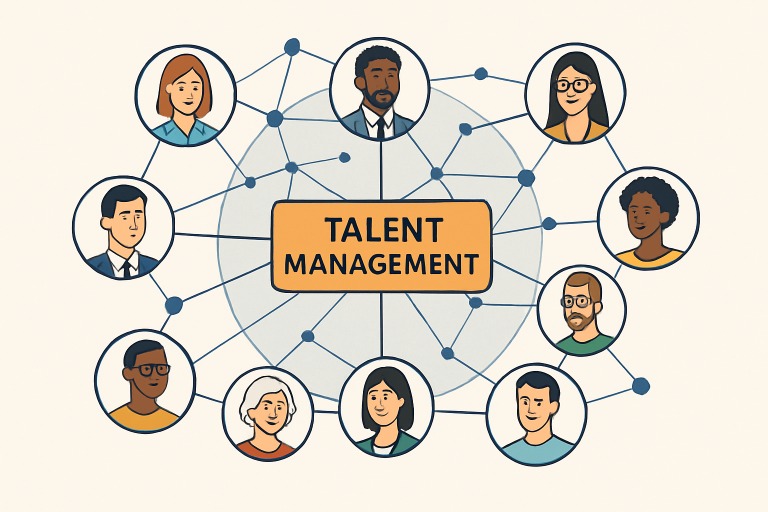
Modern talent management and executive search emphasize agility, innovation, and a people-first mindset. As workforce expectations evolve, organizations shift toward data-driven strategies, inclusive practices, and purposeful leadership development to attract and retain top talent. Flexibility and vigilance allow companies to adapt to changing market conditions while building resilience. By aligning leaders with organizational culture and long-term goals, businesses secure high-caliber talent and foster growth, engagement, and sustainability in an increasingly competitive and dynamic workplace.
Shifting Priorities in Talent Management
The accelerating pace of technological advancement, a globalized workforce, and evolving employee expectations have completely reshaped the talent management landscape. Organizations now look beyond merely filling seats and instead concentrate on sourcing strategic thinkers, adaptive leaders, and individuals who can drive innovation through uncertainty. This shift challenges the effectiveness of traditional talent identification, where reliance on static job descriptions or exclusive networks often overlooks high-potential candidates.
Companies prioritize agility, critical thinking, and emotional intelligence across all levels in today’s dynamic market. Partnering with forward-thinking platforms such as True Platform is helping many organizations reengineer their approach to executive search and unlock untapped pools of leadership talent. Modern executives are expected to deliver operational results and foster inclusive and resilient organizational cultures, making leadership selection more intricate.
The rapidly changing expectations of the workforce are a driving force behind this transformation. Employees no longer seek only financial rewards; they also demand purpose, flexibility, and continuous development. Organizations respond with more holistic strategies: mapping career paths, supporting remote and hybrid arrangements, and expanding learning opportunities. This more human-centric approach is both a response to and a catalyst for emerging talent management strategies.
Traditional talent acquisition methods, often anchored in years of experience or past job titles, give way to new approaches focusing instead on culture fit, growth potential, and demonstrable skills. This evolution prioritizes the creation of environments where emerging leaders—and future executives—are identified, supported, and retained more equitably.
The Rise of Data-Driven Recruiting
Data and advanced analytics are revolutionizing executive search. Innovative organizations are now leveraging AI-powered tools and digital platforms to sift through hundreds of thousands of potential candidates, uncover hidden patterns, and improve the quality of their hires. Using machine learning models to predict candidate success, firms reduce unconscious bias and make objective, rapid decisions in talent acquisition.
By embracing data-informed recruiting, businesses gain a significant edge: they improve efficiency, strengthen diversity, and unlock more profound insights into team dynamics and leadership potential. According to the Society for Human Resource Management, organizations that integrate AI and data analytics in their talent acquisition pipelines are not only hiring faster but also achieving better retention and cultural alignment among their senior hires.
Prioritizing Diversity, Equity, and Inclusion (DEI)
Modern organizations are embedding DEI principles across their hiring and promotion processes—not as compliance checkboxes but as vital engines of growth. Companies recognize that fostering diverse teams is the right thing to do and leads to measurable business benefits: enhanced creativity, greater problem-solving, and improved customer insights.
When DEI becomes a foundational practice rather than a “nice-to-have,” organizations see tangible improvements in engagement, performance, and innovation. By intentionally seeking out diverse talent and eliminating systemic barriers in executive search, companies future-proof their leadership pipelines while building trust among employees and stakeholders.
Adapting Talent Strategies for a Hybrid Workplace
The hybrid work model presents both opportunities and new challenges in talent management. Leading executive search firms and in-house HR teams are redesigning their search criteria to include leaders adept at managing distributed teams, fostering collaboration across time zones, and maintaining strong organizational cultures regardless of physical location.
Tomorrow’s leaders are those who can balance operational results with empathy, clear communication, and an openness to flexible work practices. Successful hybrid talent strategies depend on adaptive leaders who are comfortable leveraging technology for team cohesion and performance, making these skills central in recruitment and assessment.
Competency-Based Assessment Methods
Skill-based evaluations are increasingly favored over legacy factors such as pedigree or years of experience. Organizations now employ competency frameworks prioritizing real-world problem-solving, adaptability, and the ability to drive change. Behavioral interviews, situational judgment tests, and practical assessments are also increasingly prominent.
Tools like psychometric assessments, case studies, and structured scoring allow hiring teams to make data-backed choices and reduce subjective bias. This evolution ensures that talent identification is aligned with current and future business needs—outsized importance is given to an individual’s proven capabilities over their résumé alone.
The Candidate Experience as a Competitive Advantage
Increasingly, candidates’ experience during the search and hiring process directly influences both employer reputation and the quality of hire. Tight feedback loops, clear communication, and timely updates demonstrate respect for candidates and lay the groundwork for strong, trust-based relationships.
Organizations that invest in candidate care—such as providing transparent timelines, constructive feedback, and ongoing engagement—enjoy stronger pipelines, superior employer branding, and higher offer acceptance rates. Candidate experience isn’t just a soft benefit; it’s a tangible differentiator in fierce talent markets, as highlighted by recent findings from Forbes HR Council.
Building Future-Ready Talent Pipelines
Organizations are increasingly proactive about succession planning and talent mapping. Rather than reacting to openings or retirements, businesses build future-ready pipelines by nurturing high-potential individuals through mentorship, formal development programs, and stretch assignments.
Continuous learning is essential: companies invest in upskilling and reskilling their teams to meet new business demands and technological disruptions. According to Harvard Business Review, leading-edge organizations view succession planning as an ongoing process. This foresight enables them to remain competitive, agile, and resilient through disruption.
Conclusion: The Value of Agility in Leadership Search
In today’s dynamic environment, agility and innovation have become defining qualities of the most effective talent management and executive search strategies. As workforce expectations shift and market conditions evolve, organizations can no longer rely on traditional methods of attracting and retaining leaders. Instead, the most successful companies embrace data-driven practices that provide actionable insights, integrate diversity, equity, and inclusion as core priorities, and maintain a human-first mindset emphasizing purpose and culture alongside performance. This combination enables them not only to identify high-caliber executives but also to nurture long-term engagement and loyalty.
Staying competitive requires constant vigilance, adaptability, and a commitment to ongoing learning. By remaining informed of emerging trends and being flexible, organizations are better positioned to uncover transformative leaders and empower them to thrive. Ultimately, these strategies fuel sustainable growth, strengthen organizational resilience, and prepare businesses to meet the evolving challenges of the future of work.