The Growing Need for Accessible Bathrooms
The need for more accessible and safer bathrooms has never been greater. According to the Centers for Disease Control and Prevention (CDC), one in four adults aged 65 or older falls each year, and many of these incidents occur in the bathroom due to slippery floors and awkward layouts. With the U.S. population steadily aging and more families sharing multi-generational homes, adaptable design is crucial for protecting the wellness and independence of household members of every age and ability. Accessible design doesn’t just benefit seniors; families with young children, people recovering from injury, and those with mobility challenges also require bathroom spaces that are easy to navigate and use. One of the most transformative updates is replacing outdated tubs or showers with walk-in options. For anyone planning a bathroom remodel, considering walk-in shower installation services ensures that your space is future-proofed for comfort and safety, while still being stylish. Minor modifications and design considerations can significantly affect a bathroom’s comfort and safety. Even for those not ready for a full-scale renovation, many cost-effective and simple changes can be made immediately to reduce risk. Proactive bathroom updates also add long-term value to a home by making it accessible for more people over time.
Common Bathroom Hazards and Risk Factors
Keeping up with industry guidelines and expert advice is essential. Professional organizations like the American Occupational Therapy Association (AOTA) frequently advocate for accessible bathrooms as part of home health and injury prevention strategies. Slippery floors are a leading cause, especially when combined with water, soap residue, or bathmats lacking a non-slip backing. High thresholds at the entrance to tubs and showers can trip up children, seniors, or anyone with reduced mobility. Poor lighting, often a result of outdated fixtures or bulb placement, makes it difficult to see puddles, obstacles, or even where the shower controls are. Real-life incidents underscore these dangers. For instance, many older adults describe losing their balance when stepping over the tub’s edge, resulting in serious falls and hospitalizations. Parents with young children also worry about hard, sharp surfaces and the persistent risk of slipping, highlighting the universal need for safer bathroom environments.
Design Solutions That Prioritize Safety and Comfort
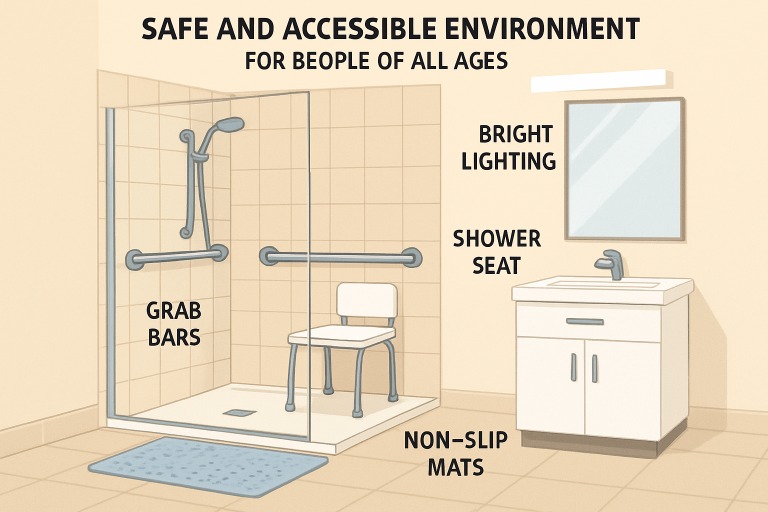
Design updates can dramatically improve both safety and comfort. Non-slip flooring is one of the most effective preventive measures and is available in a wide range of stylish finishes. Zero-threshold or curbless showers are increasingly popular, providing seamless entry for everyone and eliminating the trip hazard of a raised edge. Adjustable showerheads, hand-held sprayers, and easy-to-reach storage make bathing more convenient for users at all heights and abilities. Hardware also matters—lever handles are easier to operate than traditional knobs, especially for those with arthritis or limited dexterity. Modern grab bars now come in aesthetically pleasing finishes and can double as towel racks, ensuring utility without sacrificing appearance. The overall goal is to create a space that is user-friendly, dignified, and attractive.
How to Retrofit Bathrooms Without a Full Remodel
Families often wonder if major renovations are required to achieve safer bathrooms. In many cases, a handful of small updates can significantly reduce fall risk. Securely mounting grab bars next to toilets and inside showers offers dependable support. Adding a sturdy shower seat or folding bench provides a safe resting spot, especially for older adults or those recovering from surgery. Improved lighting—like bright overhead LEDs and motion-sensor night lights—makes navigation easier day or night. These solutions are generally affordable and can be installed without professional help. For renters or those on tight budgets, nonslip decals for tubs and showers are an excellent short-term option until a more permanent remodel is possible.
Selecting Materials and Products for a Safe Bathroom
Choosing the right materials has a direct impact on bathroom safety and durability. Tile is a popular floor choice, but it’s essential to select options with a textured, slip-resistant finish. Vinyl plank flooring is gaining traction because it’s both water-resistant and provides better grip than traditional tiles. When reviewing wall materials, consider easy-to-clean options like large-format porcelain, which minimize grout lines where mold can thrive. For showers, solid surface panels or acrylic wall systems offer seamless protection and simple maintenance.
Incorporating Accessible Design Into Any Home Style
Accessibility no longer means sacrificing style. Today’s products blend universal design principles with modern aesthetics, so you can create a bathroom that feels inviting and reflects personal taste. Matte-finish tile, contemporary grab bars in brushed nickel or matte black, and frameless shower doors are all stylish while also meeting accessibility needs. For example, a recent remodel in a classic Craftsman home integrated a roll-in shower and decorative sconces while maintaining the home’s vintage charm. Another family transformed a cramped guest bath by adding a colorful slip-resistant floor and updating fixtures, successfully balancing beauty with accessibility. These examples show that accessible design can adapt to any look or era.
Step-by-Step Checklist for a Safer Bathroom
- Install secure grab bars in reachable locations near the shower, tub, and toilet.
- Add non-slip mats or decals in and outside the bathtub and shower area.
- Upgrade to lever-style faucet and door handles for ease of use.
- Replace outdated lighting with brighter, energy-efficient fixtures.
- Keep toiletries and towels within easy reach to minimize balance risks.
- Consider adding a shower seat or bench for stability.
- Check and maintain adequate ventilation to prevent mold growth.
- Assess the bathroom regularly for new hazards or needed updates.
Additional Resources and Where to Get Help
For more information, consult reputable organizations like your local Area Agency on Aging, which provides in-person home evaluation and modification advice. The CDC offers extensive resources on fall prevention. AARP also publishes comprehensive remodeling guides for those wishing to age in place, including expert advice for accessible bathroom upgrades. Proactively updating bathrooms is one of the most effective ways to safeguard loved ones and support confident, independent living at any age. Whether through thoughtful retrofits or larger renovations, prioritizing safety ensures every member of the household can navigate daily routines with peace of mind.
Conclusion
Creating a safe and accessible bathroom is an investment in comfort and peace of mind. Small changes can make a dramatic difference, from addressing common hazards like slippery floors and poor lighting to incorporating modern solutions such as walk-in showers, grab bars, and non-slip flooring. Many of these updates are affordable, stylish, and adaptable to any home, ensuring accessibility does not come at the cost of aesthetics. Families can significantly reduce the risk of falls by taking proactive steps—whether through a full remodel or practical retrofits—and create a supportive environment for people of all ages and abilities. Staying informed through trusted resources like the CDC, AARP, and AOTA provides additional guidance to ensure effective and future-proof decisions. Ultimately, prioritizing bathroom safety means preserving independence, dignity, and quality of life for years.