Key Takeaways
- Consistent chimney care prevents hazards like fire, carbon monoxide intrusion, and costly structural issues.
- Each season demands specific checks and maintenance tasks tailored to the chimney’s usage and weather exposure.
- Professional inspections and sweepings complement at-home upkeep for thorough, reliable protection.
Keeping your chimney in excellent condition isn’t just about convenience or aesthetics—it’s crucial for preserving your home’s safety, ensuring efficient operation, and preventing costly repairs. Every season brings its own set of maintenance challenges and opportunities. By following actionable steps year-round, you can protect your chimney from weather damage, structural issues, and potential fire hazards. As expert providers of chimney cleaning Atlanta GA services, we know how each phase of the year impacts your fireplace and chimney, and we’re here to help you stay ahead of problems.
Regularly monitoring and maintaining your chimney also improves the air quality in your home and enhances the performance of your heating system. From post-winter cleaning to summer waterproofing and seasonal safety checks, a proactive mindset makes all the difference. Tending to your chimney now can save on major repairs later, offering lasting peace of mind and avoiding unexpected disruptions when temperatures drop, and the hearth becomes the heart of your home.
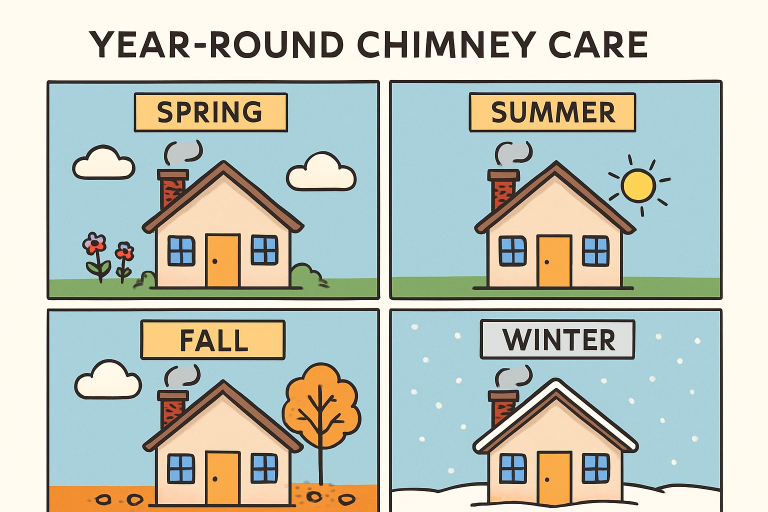
Spring: Post-Winter Inspection and Cleaning
After a long winter’s use, spring is the essential time for a close examination of your chimney, focusing on both the interior and exterior. The repeated freezing and thawing of cold months can stress masonry, leading to cracks, loose bricks, or deteriorating mortar. Outside, look for signs like crumbling surfaces, stains, or visible gaps. Inside, assess for creosote buildup, a potentially dangerous byproduct from burning wood that accumulates on chimney walls and poses a significant fire risk.
Scheduling a professional chimney sweep in the spring helps eliminate creosote and checks for hidden obstructions, such as nests or debris. An expert can also inspect the structural integrity of your flue liner and chimney cap. The cap is especially important: it prevents rain and animals from entering, which helps avoid leaks and blockages as the year progresses.
Summer: Preventing Moisture and Odor Issues
Humidity and rainfall can make unused chimneys susceptible to dampness, unpleasant odors, and even internal rust or decay. To mitigate moisture issues, evaluate the waterproofing of your chimney’s exterior masonry and consider applying an additional waterproof sealant. Examine the flashing and seals where the chimney meets the roof. Inside, odors can develop from the mix of summer humidity and leftover creosote. A well-fitting top-sealing damper can help regulate airflow and keep excess humidity out, while also saving energy by minimizing air conditioning loss through the flue.
Regularly clear away any observable debris, and keep an eye out for signs of animal activity. Preventing wildlife from nesting in your chimney will help prevent airflow problems, unpleasant odors, and costly removal services.
Fall: Preparing for the Heating Season
As cooler temperatures approach, your chimney requires a thorough assessment to ensure it’s ready for prime usage. Book a professional inspection before the burning season begins. This check-up will uncover any blockages, cracks, or inefficiencies that developed during the off-season and ensure your damper and flue operate smoothly. If you use wood, stick to seasoned hardwoods, which generate more heat and minimize creosote formation compared to green or soft woods.
Clear any flammable objects, fabrics, or decor from the vicinity of your fireplace. Replace or repair grates, screens, and tools as needed. Getting an early start will help prevent seasonal bottlenecks, as fall is one of the busiest times for licensed chimney sweeps. For additional preventive measures and fire safety guidance, review this resource from the National Safety Council.
Winter: Ongoing Vigilance and Safe Practices
With regular fireplace use in winter, stay alert for signs of trouble, such as poor drafting, lingering smoke, or odd odors—all potential indicators of chimney blockages or creosote buildup. Make it a habit to clean ash from the hearth often; excessive ash can restrict airflow and dampen performance. Always use a spark guard or fireplace screen to trap embers and prevent them from sparking fires outside the firebox.
Never leave your fire burning unattended, especially overnight or if you plan to leave home. Double-check that fires are fully extinguished before calling it a night. Install carbon monoxide detectors in living spaces adjoining the chimney, as undetected CO buildup is a serious health hazard during peak usage months.
Year-Round Best Practices
- Annual Professional Inspections: Even if usage is minimal, a yearly visit from a certified chimney expert will help identify problems early and ensure your system remains reliable.
- Appropriate Burn Materials: Always burn well-seasoned, dry hardwoods, avoiding trash, wet wood, and treated lumber to minimize toxic buildup and flue deposits.
- Effective Ventilation: Confirm that dampers and vents open and close as they should, and that no objects block safe airflow between the stove, firebox, and outdoors.
Conclusion
Routine, season-specific care for your home’s chimney is essential for sustaining fireplace safety, protecting your investment, and creating a cozy home environment. By tackling maintenance one season at a time—paired with reliable annual professional help—you’ll enjoy worry-free comfort while greatly reducing fire and structural risks in your home.