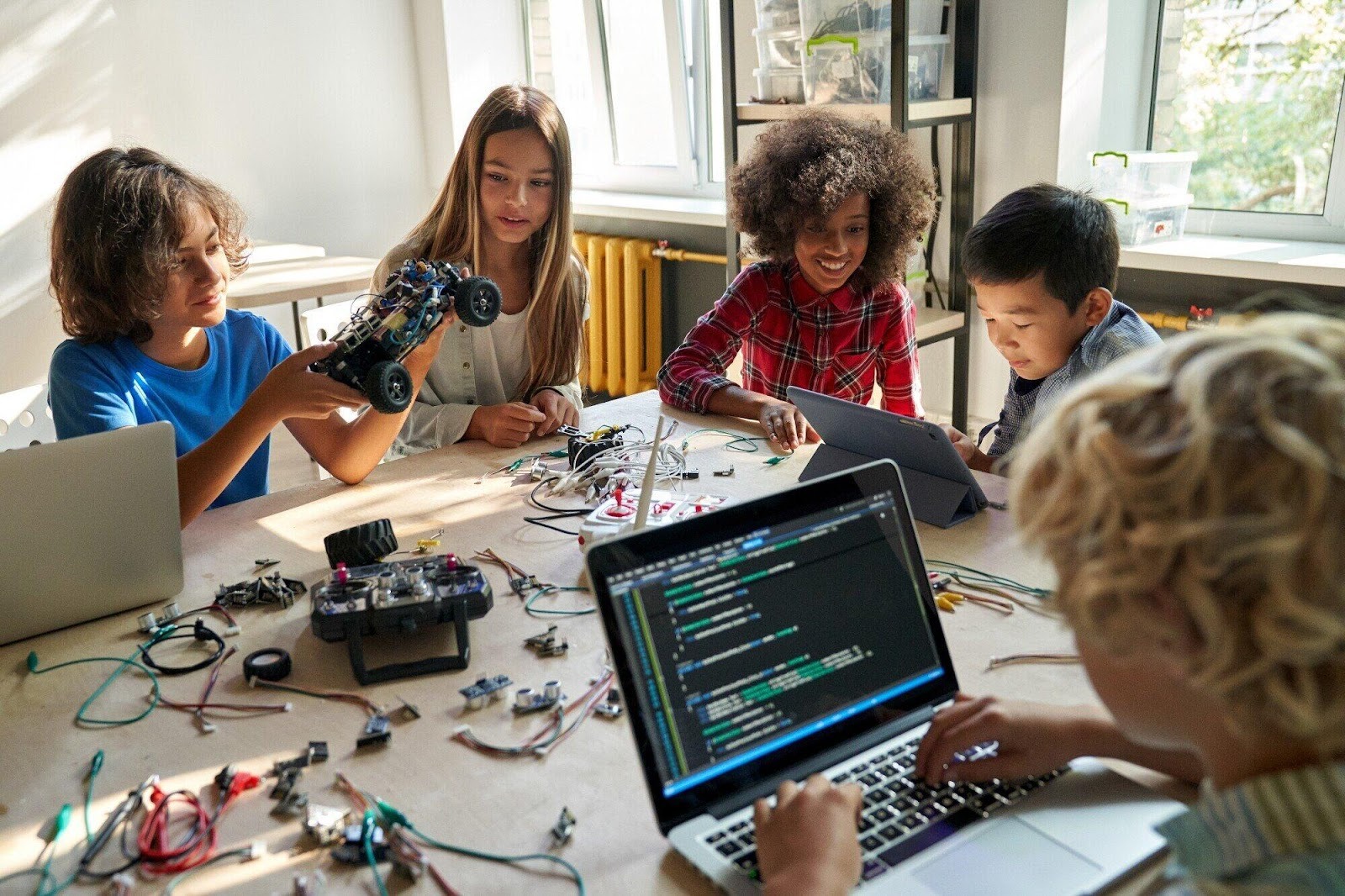
Today, the world is full of technology. Learning STEM-science, technology, engineering, and math-is very important.
These skills help students solve problems and think clearly. They also open the door to good jobs and new ideas.
STEM lets young people make apps, build smart tools, and create new things. It helps them be creative, grow, and get ready for challenges. Here’s why learning STEM is key to staying ahead and doing well in a world that keeps changing.
Driving Innovation
STEM education fuels new ideas and creativity. Students learn to think in fresh ways and find better solutions. From designing apps to building machines, STEM helps learners explore what’s possible.
It encourages trying new things and not being afraid of mistakes. Innovation starts with curiosity and hands-on learning. STEM provides the tools and knowledge to turn ideas into real projects.
By fostering experimentation and invention, students can create solutions that make life easier and better. It simply keeps innovation alive and growing.
Enhancing Problem-Solving Skills
STEM teaches students to face challenges with clear thinking. They learn to break problems into smaller steps and find smart solutions. Experiments, projects, and coding all help learners practice solving real-world issues.
These skills make thinking organized and logical. Students become confident in handling questions they don’t know the answers to. They also learn to test ideas and improve them.
Problem-solving in STEM is about learning from mistakes and trying again. These skills are useful not just in school, but in everyday life and work.
Preparing for Future Careers
STEM opens doors to many exciting jobs. Careers in technology, engineering, science, and math are growing fast. Students gain skills that employers want, like:
- coding
- analyzing data
- designing solutions
STEM also teaches teamwork, creativity, and thinking ahead. By learning STEM early, students are ready for new opportunities in medicine, robotics, and IT. These jobs often pay well and offer stability.
STEM prepares learners for careers we might not even know exist yet. It gives students confidence and tools to build their future and reach their career goals.
Empowering Students to Be Global Citizens
STEM helps students understand the world better. They learn how science and technology affect people everywhere. Projects can address issues such as:
- clean energy
- water
- health
Students see that their ideas can help communities around the globe. They gain skills to work with people from different countries and cultures. It also encourages responsibility and awareness of global challenges.
By learning to create solutions that matter, students feel empowered to make a difference. It builds empathy, teamwork, and respect. It turns learners into active citizens ready to care for the planet and its people.
Encouraging Diversity and Inclusion
STEM welcomes all students, no matter their background. Everyone can explore science, math, and technology.
Teachers encourage participation from girls, minorities, and underrepresented groups, like this STEM-focused Early College High School. This creates a mix of ideas and perspectives.
Diverse teams often find better solutions and think more creatively. Inclusion helps all students feel valued and confident. STEM programs aim to remove barriers and provide support.
By learning together, students respect differences and work as equals. STEM becomes a space where everyone can succeed.
Stimulating Economic Growth
Skilled workers in science and technology help companies make new products and improve services. Innovation from STEM boosts industries like:
- healthcare
- energy
- Information Technology
New inventions create jobs and opportunities in cities and towns. Students trained in STEM enter the workforce ready to contribute and grow businesses.
These strong skills also attract investments and research projects. Economies benefit when more people understand technology and science.
By teaching STEM, communities can grow stronger, create wealth, and stay competitive in a fast-changing global market.
Cultivating Critical Thinking
STEM helps students think carefully and make smart choices. They learn to:
- ask questions
- gather information
- test ideas
Experiments and projects teach observation and reasoning. Students practice looking at problems from different angles. Critical thinking helps them spot mistakes and find better solutions.
It also builds decision-making skills for school, work, and life. This encourages learners to think deeply, not just memorize facts. By analyzing, comparing, and testing, students become thoughtful and independent thinkers.
Bridging the Skills Gap
Many jobs today require knowledge of technology, math, and problem-solving. Learning STEM helps close the gap between what schools teach and what workplaces expect.
With this, students gain:
- hands-on experience
- coding skills
- technical knowledge
They also learn to work in teams and communicate clearly. By practicing real-world tasks, learners are ready for the workforce.
STEM ensures students are not left behind as industries grow. It creates a workforce that is skilled, confident, and ready to meet modern job demands.
Fostering Collaboration and Teamwork
STEM projects often require working with others. Students learn to:
- share ideas
- listen
- solve problems together
Teamwork teaches respect and communication. Group experiments and coding challenges even help learners combine strengths and skills. Students discover that working together leads to better results than working alone.
STEM also encourages helping others and learning from peers. Collaboration prepares students for jobs and life, where teamwork is key. This shows that great ideas grow stronger when people work together.
Encouraging Lifelong Learning
Technology and science constantly change, so curiosity and practice matter. Students learn how to explore, experiment, and improve skills.
STEM shows that learning never stops, whether it’s coding, building, or solving problems. It teaches habits like asking questions, testing ideas, and reading about discoveries.
Lifelong learning keeps minds active and ready for change. With this, students become independent thinkers who enjoy exploring and creating.
Strengthening Community Engagement
STEM connects students to their communities. Students share knowledge with neighbors and work with local groups. STEM encourages volunteering, mentoring, and teamwork.
By applying skills to real needs, learners feel proud and responsible. Communities benefit from new solutions and active participation. Students see that their work has impact and value.
The best part? STEM strengthens bonds between schools and communities. It helps build trust, collaboration, and care for others, making communities stronger and smarter.
Empowering the Next Generation Through STEM Education
Investing in STEM now helps shape tomorrow’s innovators and problem-solvers. Students gain the tools to create, explore, and lead. They develop skills that open doors to exciting careers and real-world solutions.
So why wait? Encourage young learners to dive in, ask questions, and embrace challenges. Start exploring STEM opportunities today and watch the next generation thrive in a world full of possibilities.
Did you find this article helpful? Check out the rest of our blog now!