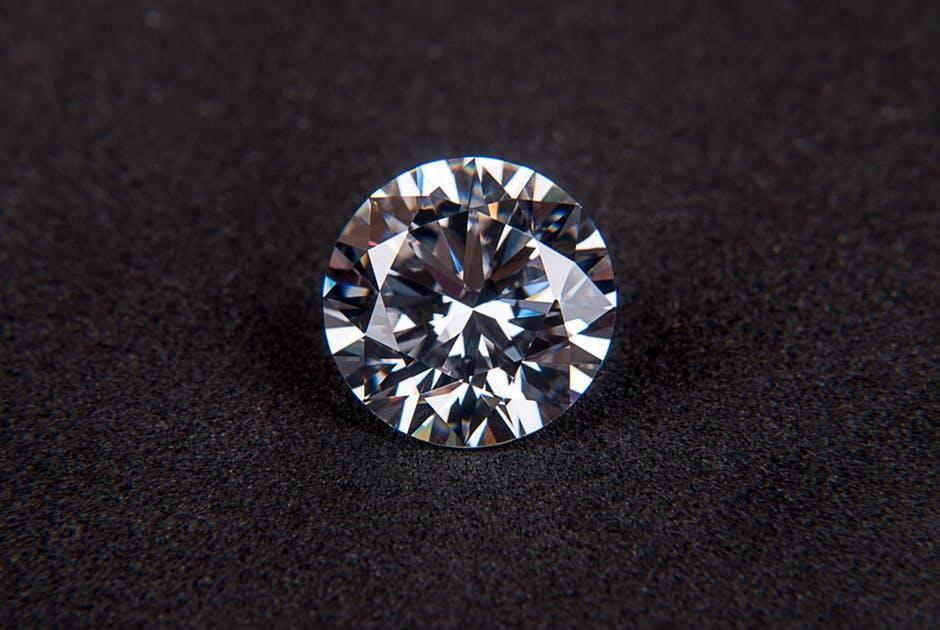
Have you ever wondered what makes diamonds sparkle so brightly? A diamond’s beauty isn’t just a happy accident. It’s the result of several important features that jewelers have been studying for centuries.
Learning about these features can help you understand why some diamonds shine more than others. By the time you finish reading, you’ll know exactly what to look for when choosing the perfect one, so you can pick a diamond you’ll treasure forever.
What Gives a Diamond Its Sparkle?
When you look at a beautiful diamond, you’re seeing light bounce around inside it. The way the light behaves is what makes the gem so brilliant. This is all thanks to its cut, which controls how the light is reflected and refracted within the stone.
A diamond’s cut isn’t just its shape-like round or square-but the way a jeweler has crafted many tiny flat surfaces called facets. These facets act like little mirrors that catch and reflect light. A well-cut diamond bounces the light back through the top, creating a stunning sparkle.
This sparkle is known as “brilliance,” and it’s one of the most desired qualities in a diamond. The more precisely the facets are angled, the more intense the brilliance will be.
Why a Good Cut Matters
Think of a bouncy ball. When you throw it straight down, it pops right back up-that’s like a clean, straight diamond cut. But if you toss it at an angle, it bounces away unpredictably. That’s similar to how light reacts to a poorly cut diamond.
Even a flawless diamond can look dull if it’s not cut well. The cutter’s skill plays a huge role in how dazzling the diamond looks. That’s why experts often say cut is the most important of the four Cs-it’s where a diamond’s beauty truly begins.
A great cut can enhance a diamond’s natural qualities and even make it appear larger than it is. On the other hand, a poor cut can waste the stone’s potential, no matter how rare or expensive it might be.
Finding a Diamond With Nothing To Hide
A diamond’s clarity is all about how free it is from tiny internal marks called inclusions, or external marks called blemishes. These are formed naturally as the diamond develops deep within the Earth. Most inclusions are too small to see without magnification.
However, the fewer there are, the more valuable the diamond becomes. A flawless diamond has no visible marks even under a jeweler’s magnifying glass, which is extremely rare.
Clarity is one of the key factors, along with cut, color, and carat weight, used to evaluate a diamond’s overall quality. Choosing a diamond with high clarity ensures exceptional brilliance and visual appeal.
Why Clarity Still Counts
Clarity is rated on a special scale that starts from “Flawless” and moves down as inclusions become more noticeable. Don’t worry if a diamond isn’t flawless-many imperfections are invisible to the naked eye. What matters most is how the diamond looks to you.
If the flaws are tiny enough that you can’t see them without a special tool, you’ve likely found a great balance between beauty and value. Jewelers often recommend choosing a clarity grade where imperfections are minimal but don’t significantly impact appearance. This way, you can invest more in other features like cut or carat size.
The Beauty of a Clear Color
Most people picture a diamond as clear or white. But in reality, many diamonds have a subtle tint of yellow or brown. This is where the color grade comes in.
The color scale runs from D (colorless) to Z (noticeable tint). D-grade diamonds are the rarest and most valuable, but many lower-grade diamonds still look beautiful. Often, the difference between two color grades is too small to notice without direct comparison.
Lighting, setting, and surrounding materials can also affect how a diamond’s color is perceived. Because of this, some buyers opt for slightly lower grades to get better value without sacrificing visual appeal.
Making a Smart Choice on Color
A diamond doesn’t need to be D-grade to look stunning. Many people can’t tell the difference between a D and an H grade, even though the price can vary a lot. Understanding color grades helps you find a diamond that looks clear and brilliant to your eye without overpaying.
It’s all about balancing appearance and budget to get the most for your money. Personal preference also plays a big role-some people prefer a warmer tint. The key is to choose what looks best to you, not just what the grade says.
Weighing Up the Carat
The word carat refers to a diamond’s weight, not its size. One carat equals 200 milligrams. While a higher carat often means a bigger diamond, it doesn’t always mean a more beautiful one.
A smaller diamond with a perfect cut, clear color, and excellent clarity can outshine a larger one with flaws. That’s why jewelers often say that carat isn’t everything-it’s just one part of the full picture.
Two diamonds with the same carat weight can appear very different depending on how they’re cut. Choosing the right balance of cut, color, clarity, and carat ensures you get the best sparkle for your budget
Carat and the Big Picture
Two diamonds of the same carat weight can look completely different depending on their cut. A well-cut diamond will look bigger and brighter than a poorly cut one of the same weight. When choosing a diamond, it’s smart to look at all four Cs together-cut, clarity, color, and carat.
A well-balanced combination will give you the best sparkle and value for your budget. Don’t be swayed by size alone-sometimes a slightly smaller diamond with better proportions will outshine a larger one. Ultimately, the right diamond is the one that looks most beautiful to you.
The Four Cs and Your Perfect Choice
Deciding on a beautiful gemstone can be a fun and exciting process. By understanding the four key factors of cut, clarity, color, and carat, you now have the tools you need to make a smart choice. You can see how each part of the process contributes to the final gem’s appearance.
Now you can find a stone that perfectly fits your style and your budget. Remember to consider all four factors together to find a balance that brings you happiness. Did this guide help you? Browse the rest of this section for more advice on a variety of topics.